Why Christ-Centered Love Changes Everything
"And now these three remain: faith, hope and love. But the greatest of these is love."
1 Corinthians 13:13
Success has many measurements—income, influence, recognition, achievement, and titles. We spend enormous energy pursuing these things, often assuming they define a life well lived. Yet Scripture quietly dismantles all of them with one extraordinary declaration: “The greatest of these is love.” Not the greatest accomplishment, intellect, or career, but love. That statement is just as countercultural today as it was two thousand years ago, and it forces us to reconsider what truly matters. In our pursuit of success, we can easily neglect the very thing God says carries the most weight.
Love Is More Than an Emotion
Our culture tends to define love as a feeling—something we fall into, fall out of, or experience depending on circumstances. But the Bible presents a radically different picture. Love is a choice before it is an emotion, a commitment before it is a feeling, and an action before it is a reaction. Paul doesn’t describe love by how it feels but by how it behaves: “Love is patient and kind; love does not envy or boast; it is not arrogant or rude. It does not insist on its own way... Love bears all things, believes all things, hopes all things, endures all things” (1 Corinthians 13:4–7). None of these qualities depend on another person’s behavior; instead, they reveal the character of the one choosing to love.
Scottish evangelist Henry Drummond famously referred to this passage as the “Spectrum of Love,” comparing it to light passing through a prism and revealing its full beauty. In that spectrum, every facet of love is clearly seen: patience, or love that suffers long; kindness, for love is kind; generosity, for love is not envious; humility, for love vaunts not itself and is not puffed up; courtesy, for love does not behave itself unseemly; unselfishness, for love seeks not her own; good temper, for love is not easily provoked; godliness of thought, for love thinks no evil; sincerity, for love rejoices not in iniquity but rejoices in the truth. Each of these qualities is like a color in that spectrum, showing us that love is not a vague idea but a collection of lived virtues. Drummond emphasized that these are not optional traits for the Christian life; they are the very essence of it.
Jesus Defined Love Perfectly
If we want to understand what love truly looks like, we need only look at Christ. He loved those who misunderstood Him, forgave those who betrayed Him, and served those who could never repay Him. He welcomed the overlooked, touched the untouchable, and even washed the feet of the disciples who would abandon Him just hours later. Ultimately, He gave His life for us while we were still sinners. This is not sentimental love—it is sacrificial love. As Jesus said, “Greater love has no one than this, that someone lay down his life for his friends” (John 15:13). The cross forever redefined what greatness looks like.
Love Is the Measure of Spiritual Maturity
Knowledge, wisdom, leadership, and even extraordinary faith all have value, but Paul delivers a sobering reminder that without love, they ultimately fall short. “If I speak in the tongues of men and of angels, but have not love, I am a noisy gong or a clanging cymbal” (1 Corinthians 13:1). Our gifts may impress people, but our love reveals Christ. Long after accomplishments fade, people remember how we treated them—how we listened, forgave, encouraged, and showed up when life became difficult. Love is what leaves an eternal legacy.
Drummond echoed this truth when he wrote that the test of religion, the final test of everything, is not what we believe or accomplish, but how we love. In his view, love is not merely one virtue among many—it is the supreme virtue from which all others flow.
Love Requires Dying to Ourselves
Perhaps the greatest obstacle to love is not hatred but self-centeredness. Real love forces us to confront difficult questions: Can I forgive before they apologize? Can I serve without recognition? Can I celebrate someone else’s success? Can I remain patient when I feel justified in my anger? Jesus answered these questions with His life, and He calls His followers to do the same. “By this all people will know that you are My disciples, if you have love for one another” (John 13:35). The most compelling testimony of the Christian faith has never been perfect arguments, but transformed lives marked by extraordinary love.
Investing in What Lasts
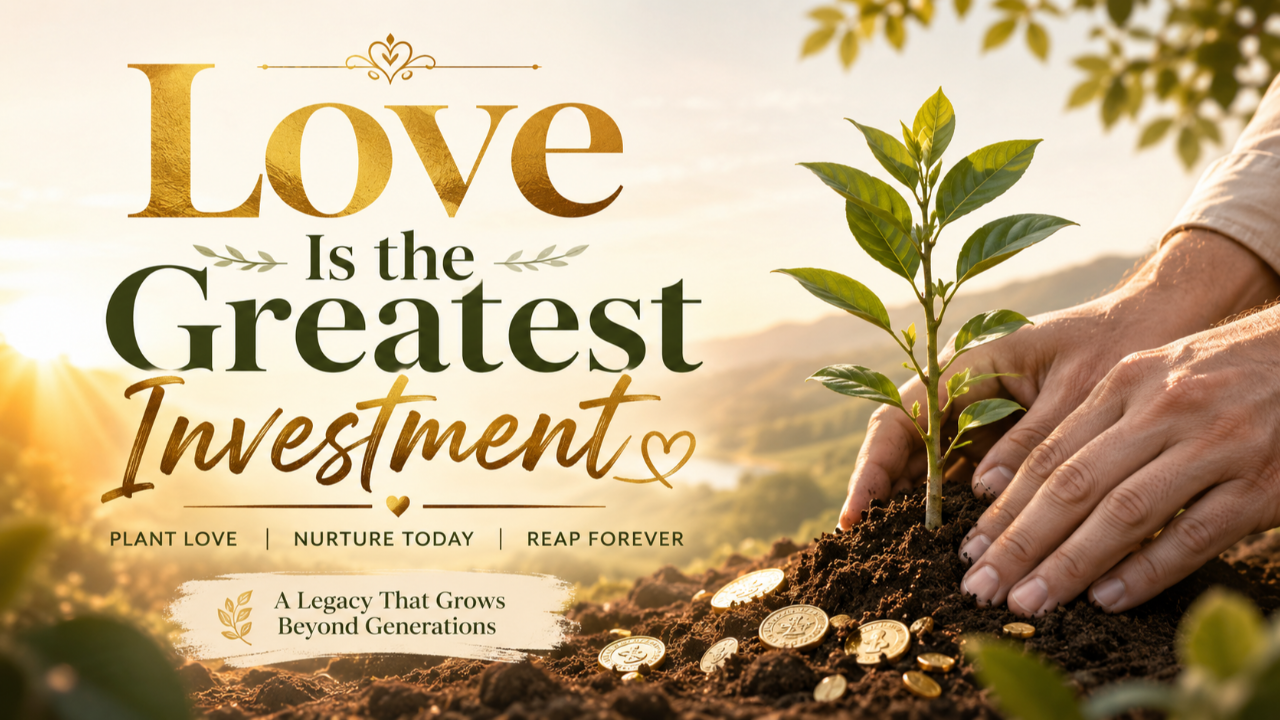
Every day, we are investing something—our time, attention, energy, and resources. The question is not whether we are investing, but whether we are investing in what lasts. Careers eventually end, possessions wear out, and achievements fade into history. Love, however, never loses its value. Every act of kindness, every word of encouragement, every moment of forgiveness, and every sacrifice made for another person matters. God sees them all, and none of them are wasted.
A Simple Challenge
Today, choose to intentionally love someone who cannot repay you. Encourage someone who feels unnoticed, forgive someone who doesn’t deserve it, and serve without expecting recognition. Listen more than you speak, and offer grace instead of criticism. Every time we choose love, we reflect the heart of Christ. And perhaps that is why Paul concluded with one of the most beautiful sentences ever written: “And now these three remain: faith, hope and love. But the greatest of these is love.”
When history is finished, faith will become sight and hope will become fulfillment—but love will remain forever.
About Henry Drummond
Henry Drummond (1851–1897) was a Scottish evangelist, writer, and lecturer associated with the Free Church of Scotland. He gained widespread recognition for his book The Greatest Thing in the World, which is based on 1 Corinthians 13 and explores the nature of Christian love. Drummond was known for his ability to communicate deep spiritual truths in a clear and accessible way, often bridging the gap between faith and everyday life. His concept of the “Spectrum of Love” continues to influence how many understand the practical expression of love as described by the Apostle Paul.